Wall Beds with Desk: Which Design Lets You Keep Your Computer Setup in Place?
Wall Beds with Desk: Which Design Lets You Keep Your Computer Setup in Place?
Wall Beds with Desk: Which Design Lets You Keep Your Computer Setup in Place?
A home office needs a desk that fits your daily routine. With wall beds with a desk, you can keep a work area and a sleeping space in the same room. The key is choosing a desk design that suits your computer setup. Some designs keep the desktop level as the bed moves, while others fold away to clear the space.
How Stay-Level Desks Keep Your Workstation Ready
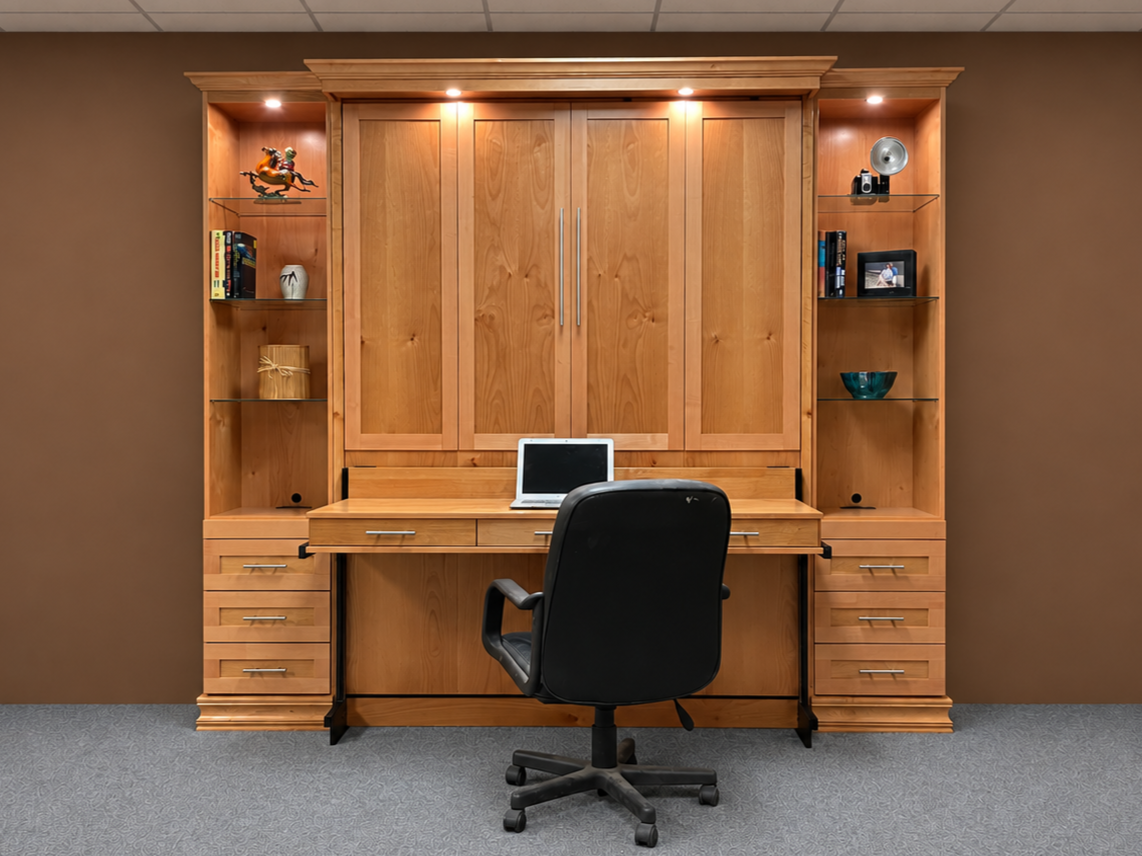
A Stay-Level Desk keeps its surface level as the bed opens and closes. Items up to 8½ inches high can remain on the desktop during movement. This makes it a practical choice for people who use their computer every day.
You can customize the workspace with features such as:
Monitor openings for your screen setup.
A pull-out keyboard tray to free up desktop space.
Desk drawers for office supplies.
Charging points and cable access.
Lighting and nearby bookcases.
Stay-Level Desk designs use a spring mechanism and come in several furniture styles.
Stay-Level vs. Inset vs. Fold-Down Desks
The right desk depends on how you want to use the room. A Stay-Level Desk keeps the work surface level during bed movement. An Inset Desk folds into the bed frame, while a Fold-Down Desk folds from the bed face.
An Inset Desk uses a piston mechanism and is available in selected configurations. The documented Fold-Down Desk design also uses a piston mechanism. For a workspace used at different times of day, an add-on Fold-Up Desk is another option to consider.
Plan for Monitors, Keyboards, and Desk Storage
Before choosing a Murphy bed and desk, consider the equipment you use and where each item will go. A computer workstation might need space for a large monitor, keyboard, printer, files, and charging cables.
Think about these two details:
Monitor placement: Share your screen’s dimensions so the desk design can account for its size and position.
Storage access: Add drawers, file storage, or a printer pullout to keep supplies organized and the desktop clear.
The added weight of monitors and desk features also matters when planning the bed mechanism.
Check Room Measurements Before Choosing a Design
Measure the wall width, ceiling height, desk depth, and chair clearance. Then check the space needed when the bed opens. Doors, windows, bookcases, and crown molding can affect the overall layout.
For example, one custom Queen design includes a 38-inch-deep desk area, two monitor openings, side bookcases, file storage, and a printer pullout. This shows how measurements and equipment needs shape the finished arrangement.
Customize Your Murphy Bed and Desk for Daily Use
Choose the bed size, opening direction, desk style, finish, and storage based on your room and routine. WWBeds Custom Furniture uses veneered plywood for its Murphy bed units, with options for wood finishes, painted colors, decorative faces, and trim. Reviewing the design drawings before production lets you check dimensions and feature placement.
Explore Wall Beds with Desk Designed Around Your Setup
WWBeds Custom Furniture can design a workspace around your computer, storage needs, and available room space. Share your measurements and preferred features to explore a custom Murphy bed and desk that fits your daily routine.
FAQs
Can I leave items on a Stay-Level Desk?
Yes. Items up to 8½ inches high can remain on the desktop as the bed opens and closes.
Which desk folds inside the bed frame?
An Inset Desk folds into the inner bed frame, concealing the work surface when the bed is closed.
Can I add storage to my desk?
Yes. Depending on the design, you can include drawers, file storage, a keyboard tray, a printer pullout, and bookcases.
What should I measure before ordering?
Measure wall width, ceiling height, desk depth, chair clearance, and the bed’s open projection. Account for doors, windows, and nearby furniture too.